
REVIEW: Fernande, Cecile by Natasha Pirard (DEEWEE)
REVIEW
Z Neto Vinheiras
12/19/20252 min read
A couple of friends, friends of friends and I share a spreadsheet calendar in which we share an album per day and give it a collective listen, wherever our bodies are in the world. Today’s album is Fernande, Cecile by Natasha Pirard, an album I shared before its release on the 21st of November.
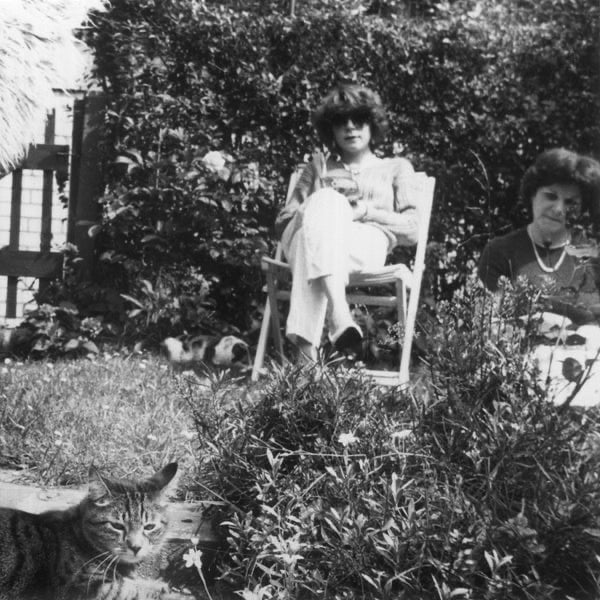
I had listened to “Buisson de Mûres” and “L’éclat” a couple of weeks back–I liked how they made me feel: soft, carried, melodically understood, rhythmically attuned. As if I could close my eyes and whatever seemed too big became something that I could hold, pet and play with. It’s an album dedicated to Mother–Natasha’s mother and late grandmother–there’s not only a healing nature to it but a mother’s lap aftermath, a warm nest and the safety to let go.
A somewhat modest transcendence. Natasha’s music emanates but is not self-consuming. It tells you you’re good wherever you are, whatever you’re going through. It’s not exploitive but it goes deep. I’ve been paying attention to patterns, repetition and how repetition itself is creative–how it’s not about going in circles, but in spirals, ascending, expanding. Everything, every time, is a little bit different, despite repetition. Take a memory; every time you remember a memory, it is slightly different than last time–you are remembering the memory you once created of a feeling you once had in a specific moment. This memory is recreated each time from the last time you remember it, and each time you do, you are always somewhere different than before. Fernande, Cecile feels like this process of canonical remembering–feeling dear and warm, close and longing but also fond enough to part.
In her latest release, Dream Cycles (DEEWEE, 2024), Natasha was already setting in this cyclical motion–exploring loops, layers and intertwined–although here already emotionally crafted and emotionally spilled through, Fernande, Cecile does itself embody the depth and heartfelt conditions of longing and grief within the same cyclical idea, but instead an expansive one: a higher cloud, a deeper meaning.
Side A is Fernande, Natasha’s grandmother. Fading landscapes that were once a world, tainted with loss–from “Jardin des fleurs” with the company of birds, recognizable melodies in motion, you can see the flowers moving with the breeze; to “Dernière visite”, a long track difficult to let go, a heavier pace and an invitation to surrender a little. Natasha’s voice is an enveloping echo of generational warmth, loops of love crossing time and memory; to “La tristesse insoutenable”, a heart beating closing the cycle. Again, Pirard’s voice tells us something that words can’t, something that lives beneath the breath, under the skin, inside the chest.
Cecile, Natasha’s mother, is side B. Seizing, recovering memories once more; care and gratitude. “Changement de pas” embraces change, a slightly different tone and a new beginning: one of a new light we can witness in “L’éclat”–a moment referring to new forms of love and home found between the musician and her mother. It’s expansive, like a universe expanding. “La fin le début,” just like life and death–a cycle means an end is a beginning; and we’re ready to part–in deep love and tremendous softness.

Running Man Newsletter
Get RMP updates, select articles, essays and goings-on


RUNNING MAN PRESS
CoNTACT
info@runningmanpress.ca
© 2024. All rights reserved.
ads@runningmanpress.ca