
REVIEW: Sojourn - CAVS
REVIEW
Charles-Edouard Lahr
5/21/20262 min read
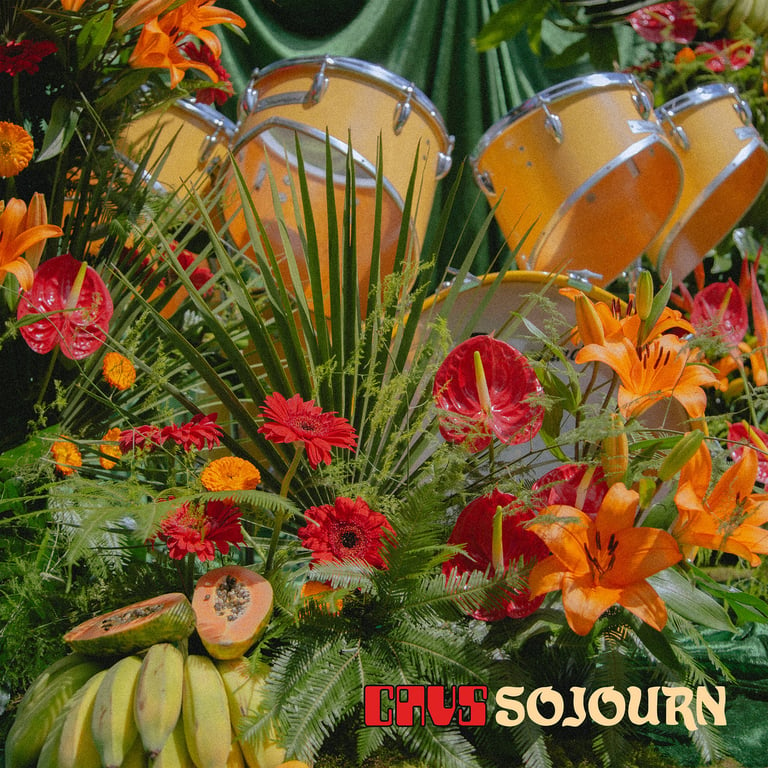
CAVS’ sophomore album Sojourn feels like a slow river opening in front of you, warm, colourful, and strange. It’s the perfect record for the beginning of spring, when everything outside starts breathing again. Compared to his 2021 self-titled solo album, built around drums and percussion, Sojourn feels easier to enter. It’s still experimental in spirit, but softer in delivery, shaped by jazz-funk textures, confident winds, and wandering basslines.
What works immediately is how many layers are overlaping without the album collapsing into a mess. Flutes, horns, bass, guitar, keys, and drums keep passing ideas between each other, yet every instrument leaves space for the others to speak. Cavs’ drumming shines because of that space. In King Gizzard & the Lizard Wizard (KGLW), his talent can sometimes hide inside the chaos, even when he’s clearly driving it. Here, he guides the listener with patience, control, and curiosity. Sojourn comes across less like a side project and more like a proper arrival.
“Victoria Amazonica” sets the mood beautifully. The intro eases you in, announcing right away that this is going to be a chill ride rather than a wild sprint. It feels like floating down a slow river filled with colorful sights, with the flute and drums having this delicate conversation that becomes one of the album’s early pleasures. “Emerald Nile” takes you somewhere deeper, somewhere quietly alive and unknown. There’s a playful sense of discovery in it, like walking through a jungle and realizing the path is changing behind you.
From there, Sojourn keeps building its little world with patience, even when its limits start to show. “First Light” carries the same dreamy movement forward, glowing softly without forcing the feeling. But by the time “Silk Road” arrives, the album’s language becomes a little too familiar. The flute and drums still sound beautiful together, and that conversation remains the heart of the record, but you begin to feel how often the album returns to that same exchange. It doesn’t ruin the mood, but narrows it.
“Boitatá” brings that focus back, with the flute and drums playfully chasing each other through the groove. “Death Bat” shifts into something stranger, bringing out that KGLW-like weirdness in the rhythm and structure. It reveals how much of Cavs’ personality has probably been hiding inside those KGLW arrangements all along. Then “Paititi” lands with a quiet emotional pull, capturing the record’s warmth, looseness, and sense of adventure.
The second half is where Sojourn becomes less even. “Candiru” deserves credit for trying to stretch the record somewhere different, but it runs long and never fully catches. “The Seeker” works better, though it mostly revisits moods the album has already explored, making you feel like you’ve passed this part of the river before. Thankfully, “The Keeper” brings everything home. The trumpets return, the space widens, and suddenly the record feels complete again, as if every instrument met along the way has gathered for one final push.
Sojourn doesn’t tell a strict story, and it doesn’t need to. Its strength comes from the movement, and the atmosphere of being carried somewhere without knowing exactly where you’re headed. It has stretches where the scenery repeats itself, but even then, the playing remains thoughtful and alive. More than anything, it shows Cavs stepping beyond the role people already know him for. On Sojourn, he doesn’t just keep rhythm. He builds the journey around it.



RUNNING MAN PRESS
CoNTACT
info@runningmanpress.ca
© 2024. All rights reserved.
ads@runningmanpress.ca